
Wearing no shoes, they walked to the stage under the magnificent lights of Estadio Azteca in Mexico City.
As they approached, the world could perceive their nervousness. Something was off; their hands tied to their backs seemed to be trying to communicate something. They positioned themselves on their gold and bronze podiums, and right behind them, the U.S. national anthem started playing on the speakers.
Tommie and John spoke… louder than the world ever imagined.
Following their demonstration, Tommie Smith and John Carlos were given 49 hours to depart the U.S. Olympic team for their black-gloved protest addressing black community poverty and racism.
The International Olympic Committee (IOC) declared it: “a deliberate and violent breach of the fundamental principles of the Olympic spirit».
This moment in the Olympics will be forever etched in the annals of sporting history. Their clenched fists bore profound significance devoid of verbal expression.
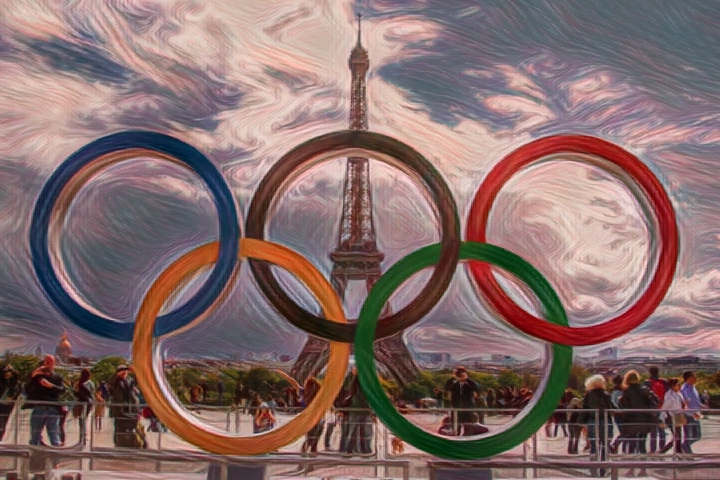
Once more, as the Olympic games approach, the debate on including politics reignites. A large French union pushes for protests and potential strikes to influence President Emmanuel Macron, Russian athletes face restrictions on displaying their flag and anthem, and ongoing criticisms of Israel’s involvement remain prominent.
Sadly, once again we seem to miss asking the right question. It is not about debating if the Olympics should be political, but about understanding why they will always be, whether we like it or not.
We need to finally acknowledge that sports showcase the most admirable and distinctive trait of each individual: the pursuit of excellence while also valuing the presence of others and, in essence, showing them respect simultaneously.
From the outside, we could look at LeBron James lining up against Nikola Jokic or Thiago Almada against Kylian Mbappé and think this is just another exciting sports competition similar to the NBA and FIFA World Cup highlighting the best athletes in the world. Still, in reality, the colors and flags they represent provide an indescribable reminder that it’s possible to live in a world where the self isn’t paramount, and borders and differences create the essence of human diversity.
In light of individuals like Quan Hongchan, a seventeen-year-old with three perfect scores and five world titles, and Lasha Talakhadze, recognized as the strongest Olympian in history, it is essential to acknowledge the value of achieving peak human performance without primary motivation from financial incentives. Quan and Lasha symbolize every educator, civil servant, and artist whose contributions, often undervalued by society, are instrumental in the progression towards a better communal existence.
Simone Biles, Katie Ledecky, and Diana Taurasi not only exemplify the progress of women’s sports but also serve as a poignant reminder of the growing irrelevance of regulations such as France’s ban on hijabs in our advancing society.
Since 1920, Belgium, as the Olympic host, decided not to invite Germany, Austria, Bulgaria, Hungary, and Turkey. In 1948, London excluded Japan and Germany. South Africa was banned in 1964. This trend continued with Afghanistan being excluded from the Sydney Olympics in 2000. Presently, debates revolve around Russia and Israel’s potential participation.
This historical trend highlights the political dimensions of the Olympics. More importantly, this constant struggle will never cease because we seem to have not learned anything from the power of sports.
The strength of the Olympics is found in its abrasive way of demolishing biases, stereotypes, and disagreements. At the gun start, money, race, and power immediately turn irrelevant and get overridden by preparation, courage, and teamwork, the sole determinants of victory.
The participation of conflicting countries in the Olympics should not be viewed as a matter of right or wrong, but rather as a significant demonstration of the IOC’s strength. The emotions expressed by athletes, whether in moments of elation or desolation, serve as a poignant reminder of the senselessness inherent in wars, discrimination, and violence.
When Aryna Sabalenka enters the tennis court for the initial time, or Israel’s soccer team takes to the field, it must never be a subject of dispute. They ought to be regarded as valuable embodiments of the notion that sports serve as the exclusive platform for transcending our disparities. These athletes participate in the Olympics not as a result of their nations’ tensions but in spite of them, shining a light of optimism on the arena.
While in Paris, the Russian national anthem will not be present. However, it should be played for all individuals – children, mothers, and citizens – who stand against violence but lack a prominent platform to voice their stance. Recognizing the influential role of the Olympics, we should amplify its significance as a poignant symbol of the harmonious resonance of unity.
For once, let’s stop debating whether our Games should include countries in conflict. Let’s evolve and recognize that the Olympics have always been immune to our societal irrationalities and our lack of compassion.
Let us acknowledge that every four years, we compel ourselves to depict, during the most enchanting competitions, our World as it ought to perpetually exist.
 RedDeep